
Derailment response
When the line stops, we move.
Derailment clearing, track repairs, and transport support. Call to confirm availability, access, and the required response.
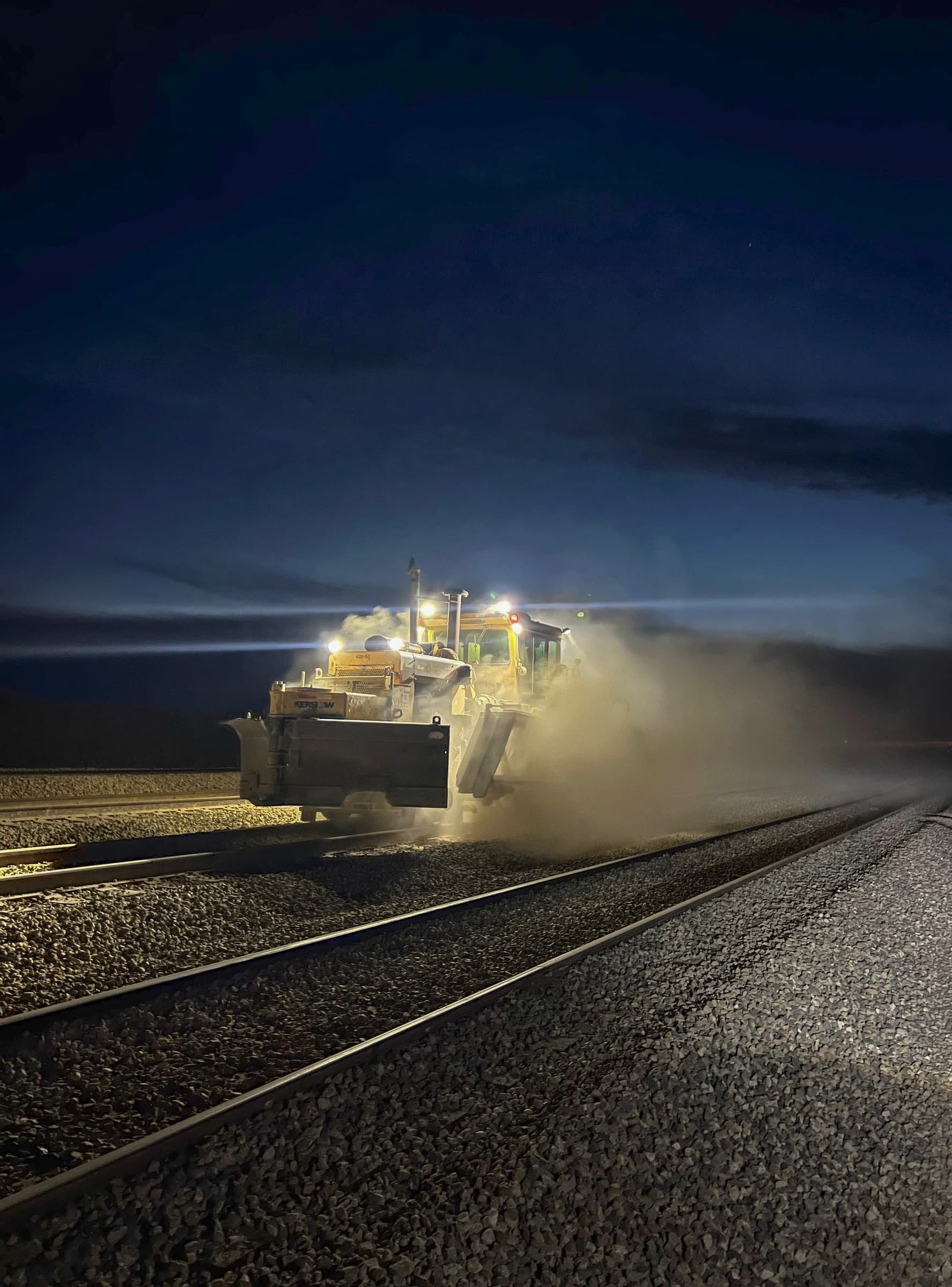
From the call to trains running.
Start by confirming the incident details and resource availability. The response scope may include clearing, track reconstruction, surfacing, inspection, and coordinated handback.
Call and assess
Discuss the location, equipment involved, dangerous goods status, and access; confirm available crews and next steps.
Mobilize
Crews, hi-rail equipment, loaders, transport, track panels, ties, rail, and OTM begin moving.
Clear the site
Equipment is cleared or re-railed in coordination with the railway, shipper, and first responders.
Rebuild and release
Track is rebuilt, surfaced, inspected, and documented for return-to-service sign-off.
Western Canada coverage
Ironhorse is based in Crossfield, Alberta. Crew availability, travel time, access, and the equipment required are confirmed for each request.
Alberta
Primary response zone with crews and equipment staged from Crossfield, north of Calgary.
British Columbia
Heavy transport and advance crews mobilize into mainline corridors, industrial spurs, and terminals.
Saskatchewan
Province-wide deployment for grain, potash, energy, and remote prairie trackage.
What to have when you call
None of this is required to start. Every detail helps shorten time-to-repair.
Call Ironhorse- Nearest town, subdivision, and milepost if known
- Number and type of cars or units off the rail
- Load status and any dangerous goods involved
- Road access, gates, crossings, and ground conditions
- Railway or facility contact currently on scene
Planned work is not an emergency.
For rehabilitation, welding, surfacing, or equipment rentals, send a project scope instead.