
Sequencing a production tie gang around live operations
How tie replacement programs are scoped, how material flow and track time shape production, and what an owner should expect behind the gang.
- Published
- Updated
- Reading time
- 4 min
The short answer
A tie replacement program needs a condition-based scope, material plan, equipment sequence, and agreed track access windows. Coordinate replacement, fastening, ballast work, surfacing, and inspection so the owner's requirements for returning track to service are addressed.
A tie program looks simple from the outside: old ties out, new ties in. In practice, a production tie gang is a moving factory. Material has to arrive ahead of the gang, waste has to leave behind it, half a dozen machines have to work in a fixed order, and all of it has to fit inside whatever track time the owner can release without stopping trains.
This article explains how tie programs are scoped, how the gang is sequenced, and what a track owner should expect before, during, and after the work.
How a tie program is scoped
Tie replacement is driven by inspection. An inspector walks or rides the track and marks ties that are no longer holding gauge, spikes, or plates. The result is a tie count per section of track, usually expressed as ties per rail length or per mile.
From that count, the owner and contractor decide between:
- Spot tie renewal. Individual defective ties are replaced by a small crew. Appropriate where the count is low and scattered.
- Production tie replacement. A full gang replaces a set number of ties per rail length across a section of track. Appropriate where the count is high enough that spotting would be slower and more disruptive than a single planned pass.
The threshold is different for every owner, but a common rule is that once a track needs more than a handful of ties in each rail length, production is cheaper per tie and leaves the track in better condition.
The machines and the order they work in
A production gang is a sequence of machines, each doing one job, moving down the track in a fixed order. A simplified version:
- Tie distribution. New ties are dropped along the track ahead of the gang, usually from a boom truck or from a work train.
- Spike pulling and plate removal. Spikes come out of the ties marked for replacement, and plates are set aside.
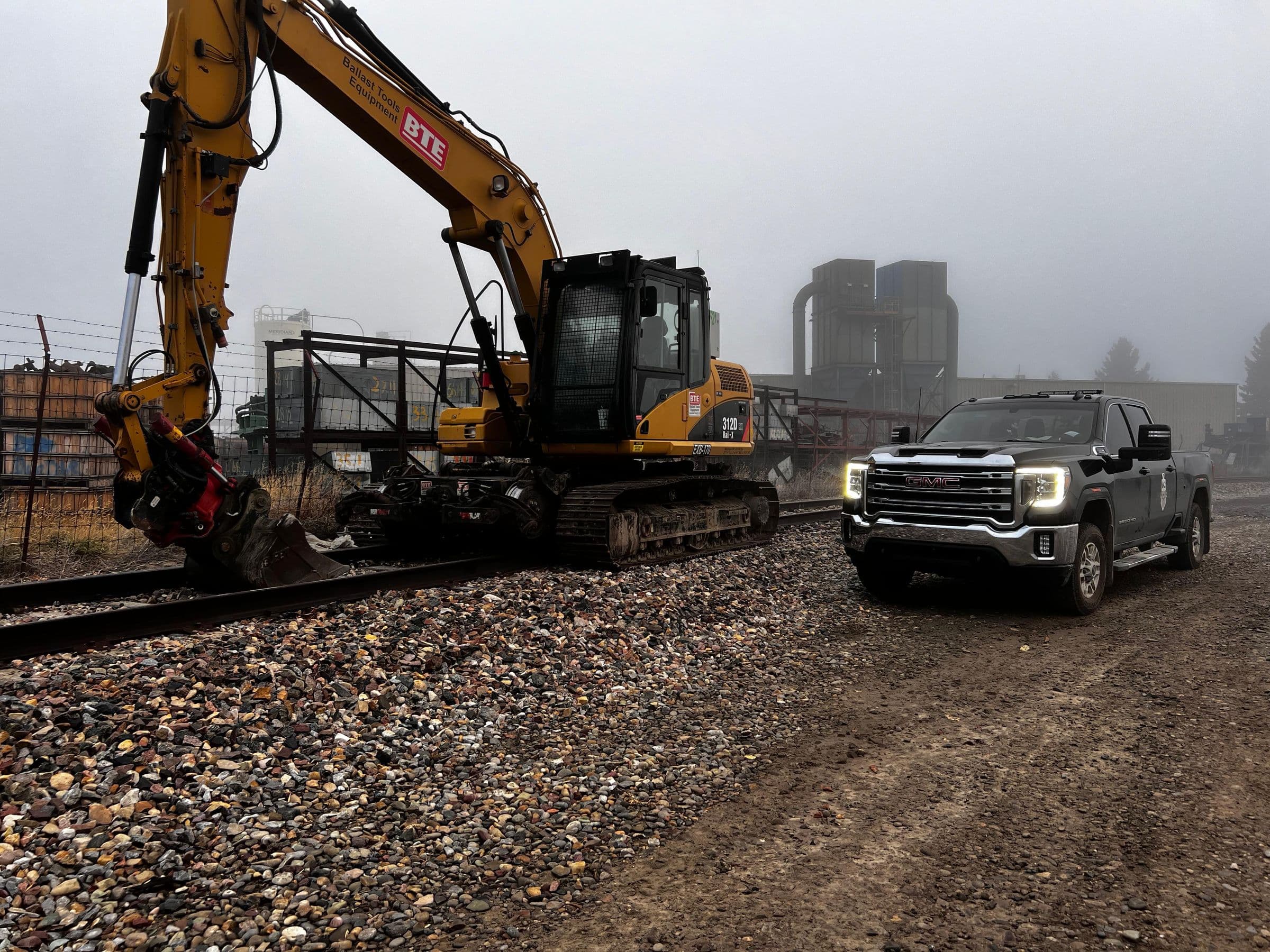
- Tie extraction. A tie handler or hi-rail excavator with a tie head pulls the old tie out from the side of the track.
- Tie insertion. The new tie is pushed into the crib, positioned, and squared.
- Plating and spiking. Plates go back on, and the tie is spiked to gauge.
- Anchoring. Rail anchors are applied or adjusted so the rail cannot creep.
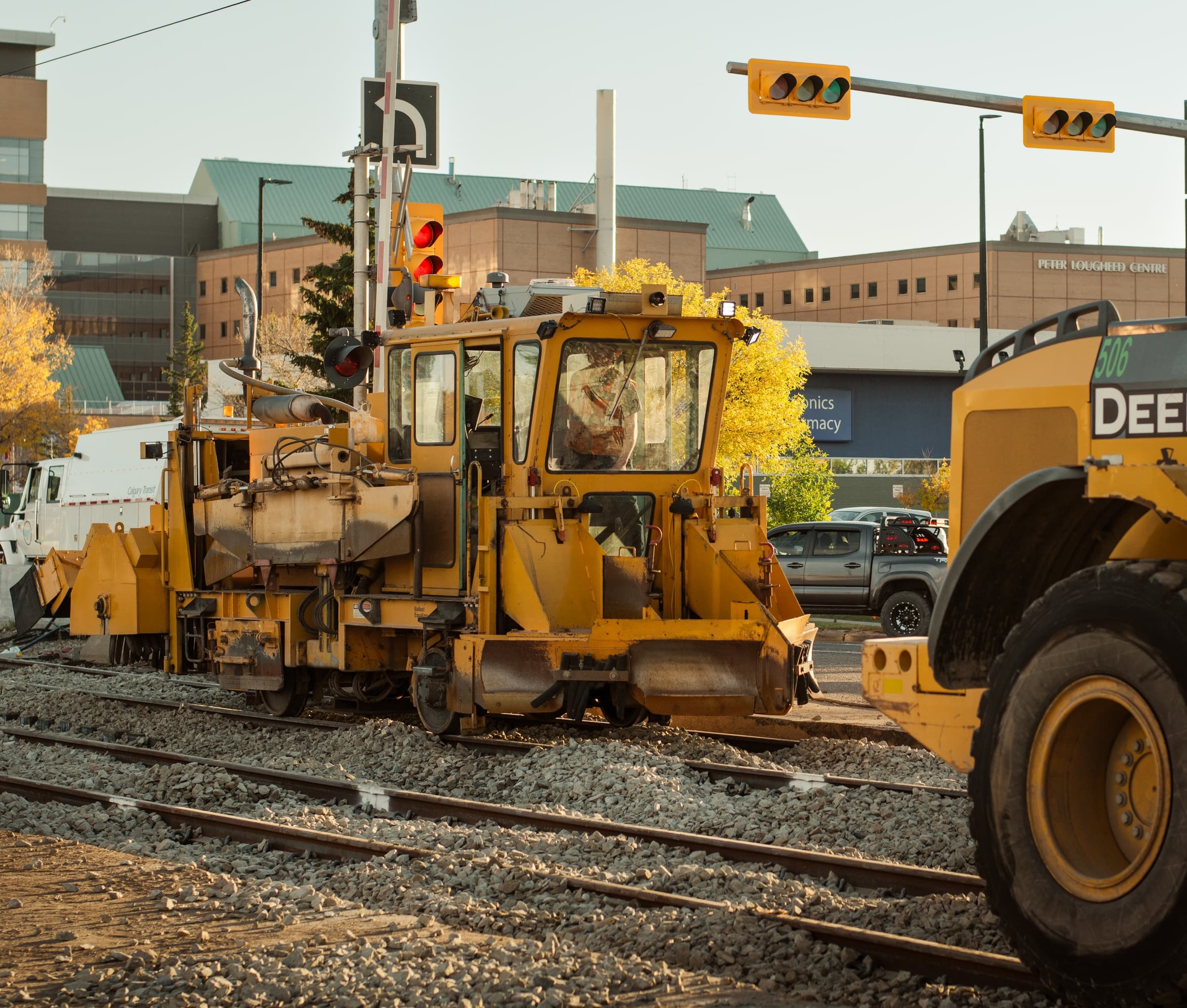
- Ballast and surfacing. Ballast is added where the extraction disturbed it, and the track is tamped, lined, and regulated behind the gang.
Each step is limited by the one in front of it. If tie extraction slows because the ballast is frozen or cemented, everything behind it waits. Good gang supervision is largely about keeping the sequence balanced.
Material flow decides production
Ties are heavy, bulky, and needed at a rate the gang cannot outrun. The plan has to answer:
- Where are new ties staged? Trackside piles, a rail-served material yard, or delivered daily by truck. Each has an access and handling cost.
- How do old ties leave? Old ties are gathered, loaded, and hauled to disposal or recycling. Leaving them in the ditch is not an option on most properties.
- Where do plates, spikes, and anchors come from? Reusing serviceable plates saves money but adds a sorting step. New fastenings need to be on site before the gang arrives.
- Where does ballast come from? Disturbed cribs need ballast. On a big program this means a ballast train or truck deliveries timed to the gang.
Track time is the other constraint
A gang works within work blocks: windows when the owner has released the track. On an industrial spur, the window might be all day when no cars are scheduled. On a mainline or a busy yard lead, it might be a few hours between trains.
Short windows change the plan. The gang has to be able to clear the track and leave it safe for a train at the end of every block. That means:
- Never leaving a run of ties out with no new ties in
- Spiking and anchoring far enough behind extraction that the track is stable
- Surfacing or at least ballasting before speed can be restored
Owners who can consolidate track time into longer windows get more ties per day and lower unit cost.
What to expect behind the gang
Freshly worked track is not finished track. Expect:
- A slow order. Newly tamped ballast has not consolidated. Most owners restrict speed until traffic or a second surfacing pass has settled the track.
- A second surfacing pass. Many programs plan a follow-up surfacing run after some traffic has run over the new ties.
- Cleanup. Old ties, scrap fastenings, and debris are gathered and removed.
- Documentation. Tie counts, locations, and geometry measurements go into the owner's record.
Timing in Western Canada
Frozen ballast makes tie extraction slow and hard on equipment. Most production tie work in Alberta, Saskatchewan, and BC runs from spring thaw into late fall. Booking a gang for the window you want means planning during the previous winter, when inspection data is in hand and track time can be negotiated.
Questions to ask a tie gang contractor
- What is the expected production rate for this track, and what assumptions is it based on?
- How will material delivery and old tie removal be handled?
- What is the plan for clearing the track at the end of each work block?
- Is surfacing behind the gang included, and is a second pass planned?
- Who inspects and documents the finished track?
Ironhorse fields production tie and steel gangs across Western Canada with tie handlers, hi-rail excavators, anchor equipment, and surfacing machines. The tie and steel gangs page covers scope and equipment, and the track rehabilitation page explains how tie programs fit into a broader rehabilitation plan.
Sources and further reading
Planning guidance for owners and procurement teams. Confirm site conditions, applicable jurisdiction, and the track owner's current requirements with qualified personnel before work begins.
Turn the plan into a project brief.
Gather the location, condition information, access windows, and scope before requesting a bid.