

Railway service
Track Rehabilitation
Tie replacement, rail relay, turnout renewal, drainage work, and surfacing programs.
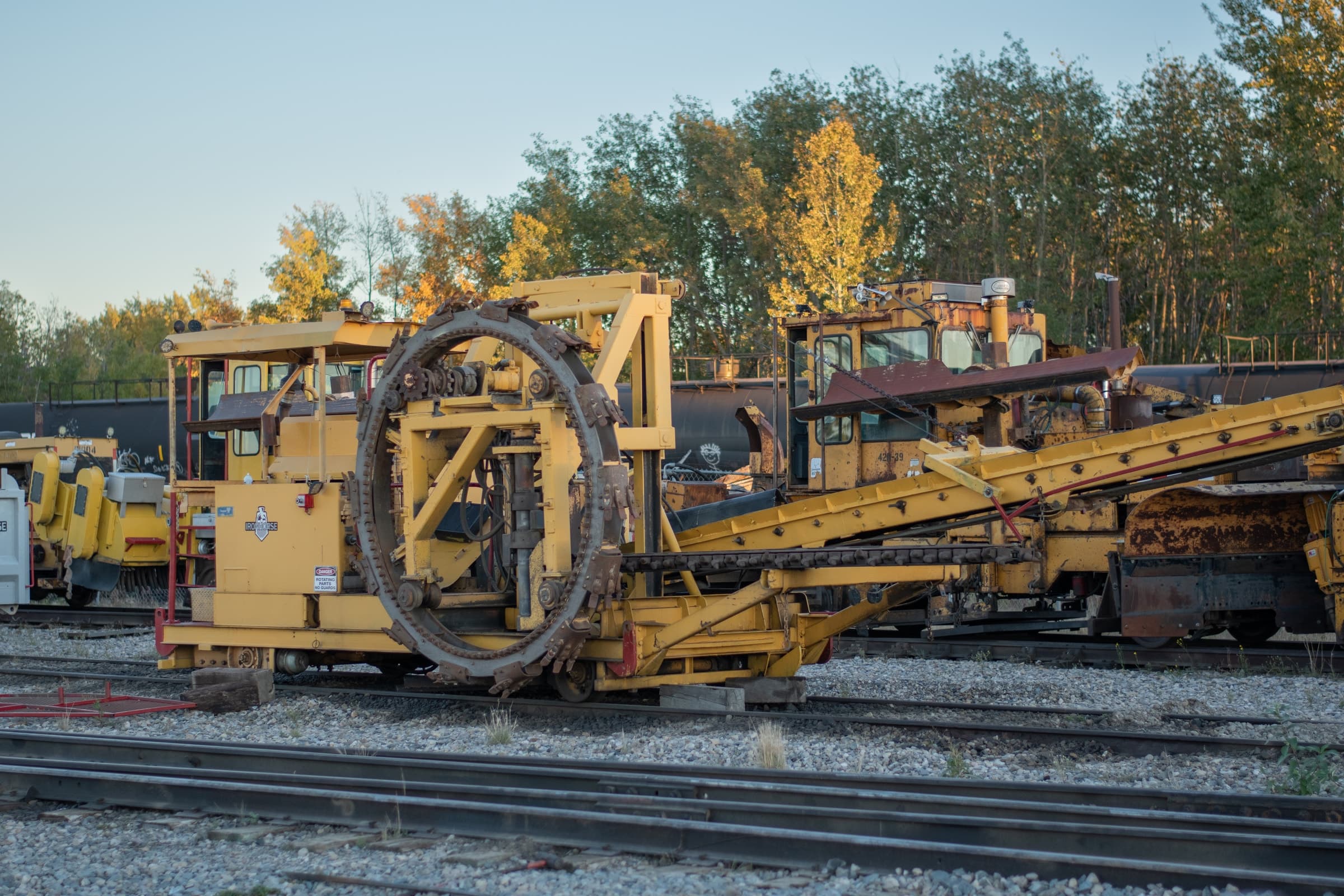
A complete field scope.
Ironhorse rehabilitates industrial, shortline, and mainline track to restore condition and operating reliability. Crews deliver tie programs, rail relay, turnout renewal, gauge correction, undercutting, drainage work, and surfacing around the owner's operating windows.
How the work moves.
Define priorities
Use inspection findings, operating constraints, and owner standards to sequence the work.
Build the work block
Match gang size, material flow, and equipment to the available track window.
Finish behind the gang
Restore line, level, ballast profile, and inspection-ready track before handback.
Equipment matched to scope
- Gopher and Super Gopher undercutters
- Tie handlers
- Anchor units
- MKIV tampers
- Ballast regulators
Common questions
Answers drawn from Ironhorse's published information and standard railway practice. Project specifics are confirmed in the bid.
How is rehabilitation scope decided?
Inspection findings set the priorities. Tie counts, rail condition, turnout wear, drainage, and geometry measurements are sequenced against the owner's standards and the operating windows available.
Can rehabilitation be done around live operations?
Yes. Work is planned in track blocks so the line is left safe for traffic at the end of each window, with ties spiked and anchored and ballast restored before handback.
What happens behind a rehabilitation gang?
Surfacing, ballast regulating, cleanup of old material, and inspection documentation. A follow-up surfacing pass is often planned after traffic has consolidated the new ballast.
Plan with evidence.
Discuss your track rehabilitation project.
Share your location, target dates, and the scope you know. Confirm access and operating requirements with the team before pricing.
Related capabilities
New Track Construction
Industrial spurs, yard tracks, and loop tracks built from sub-ballast through commissioning.
Emergency Derailment Response
Derailment clearing, re-railing, emergency track repair, and return-to-service support.
Thermite Welding
Field welding for joint elimination, pull-aparts, defect repair, and continuous welded rail.