
Railway service
Production Surfacing
Tamping, lining, regulating, and geometry work for mainline, yard, industrial, and transit track.
A complete field scope.
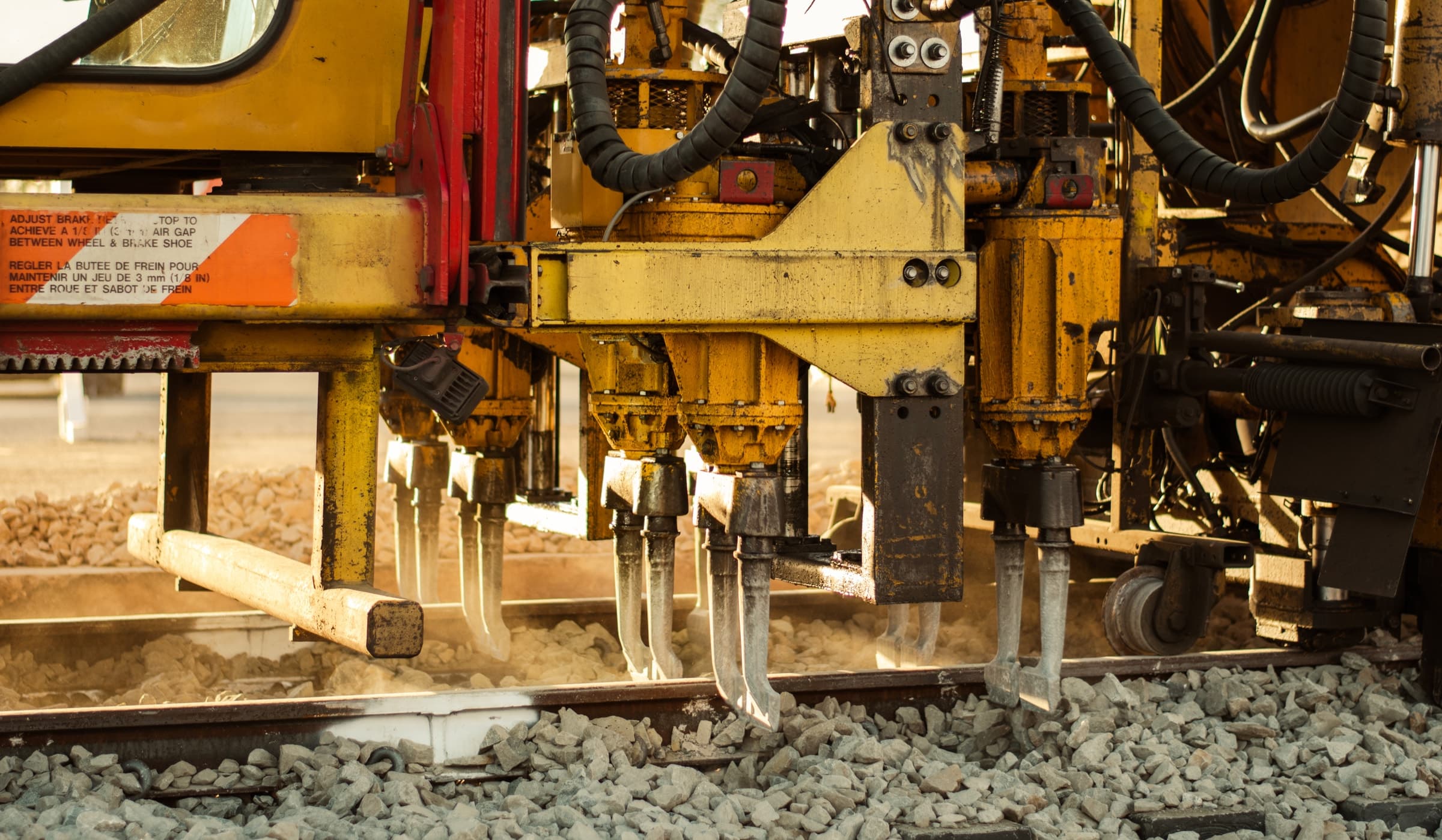
Ironhorse surfaces railway track with MKIV tampers and ballast regulators, correcting line, cross-level, and profile while restoring the ballast section. The fleet includes Jupiter II-equipped machines designed in-house for narrow transit rights of way.
How the work moves.
Measure the track
Review geometry, ballast, drainage, access, and the required finished profile.
Correct the geometry
Sequence lifts, lining, tamping, and regulating through the work block.
Verify the finish
Check the completed alignment, cross-level, profile, and ballast section.
Equipment matched to scope
- MKIV tampers
- Jupiter II system
- Ballast regulators
- Transit-profile regulator
- 100 km/h-capable regulator
Common questions
Answers drawn from Ironhorse's published information and standard railway practice. Project specifics are confirmed in the bid.
What problems does surfacing correct?
Profile, cross-level, and alignment errors, low joints, and the ballast section after tie or drainage work. Surfacing does not fix fouled ballast, failed subgrade, or defective ties; those are addressed first.
Can Ironhorse surface transit track with tight clearances?
Yes. Ironhorse designed an MKIV tamper configuration with the Jupiter II system to fit transit rights of way, and operates a ballast regulator with a transit profile.
Is geometry data available after surfacing?
The tamper measures geometry as it works. Ask for before-and-after data when planning the program so the results become the baseline for the next inspection cycle.
Plan with evidence.
Discuss your production surfacing project.
Share your location, target dates, and the scope you know. Confirm access and operating requirements with the team before pricing.
Related capabilities
New Track Construction
Industrial spurs, yard tracks, and loop tracks built from sub-ballast through commissioning.
Track Rehabilitation
Tie replacement, rail relay, turnout renewal, drainage work, and surfacing programs.
Emergency Derailment Response
Derailment clearing, re-railing, emergency track repair, and return-to-service support.