
What a hi-rail truck does on a railway job
How hi-rail vehicles get onto the track, the trucks and machines that carry rail gear, the rules that come with them, and the jobs that cannot be done without one.
- Published
- Updated
- Reading time
- 3 min

The short answer
A hi-rail vehicle travels on roads and railway track using fitted rail gear. It moves people, tools, materials, or specialist equipment to the work location. Track access requires suitable equipment, qualified personnel, and authorization under the track owner's rules.
A hi-rail truck is a road vehicle fitted with retractable steel guide wheels so it can drive onto a railway at a crossing, lower the wheels, and travel along the track. The rubber tires still carry the load and provide drive; the rail wheels keep the truck aligned on the rails. Lift the wheels at the next crossing and it is a road truck again.
That simple idea is why hi-rail equipment sits at the centre of most railway maintenance and response work. Track is rarely beside a road. The places that need attention are usually kilometres from the nearest access, and a hi-rail vehicle is the fastest way to put people, tools, water, or lifting capacity exactly where they are needed.
The vehicles that get hi-rail gear
Almost any chassis can be rail-equipped. On a railway contractor's fleet you will typically find:
- Hi-rail pickups and crew trucks for inspections, supervision, and moving crews and hand tools along the track.
- Hi-rail boom trucks with grapple or magnet attachments for lifting ties, rail, plates, and turnout components on site.
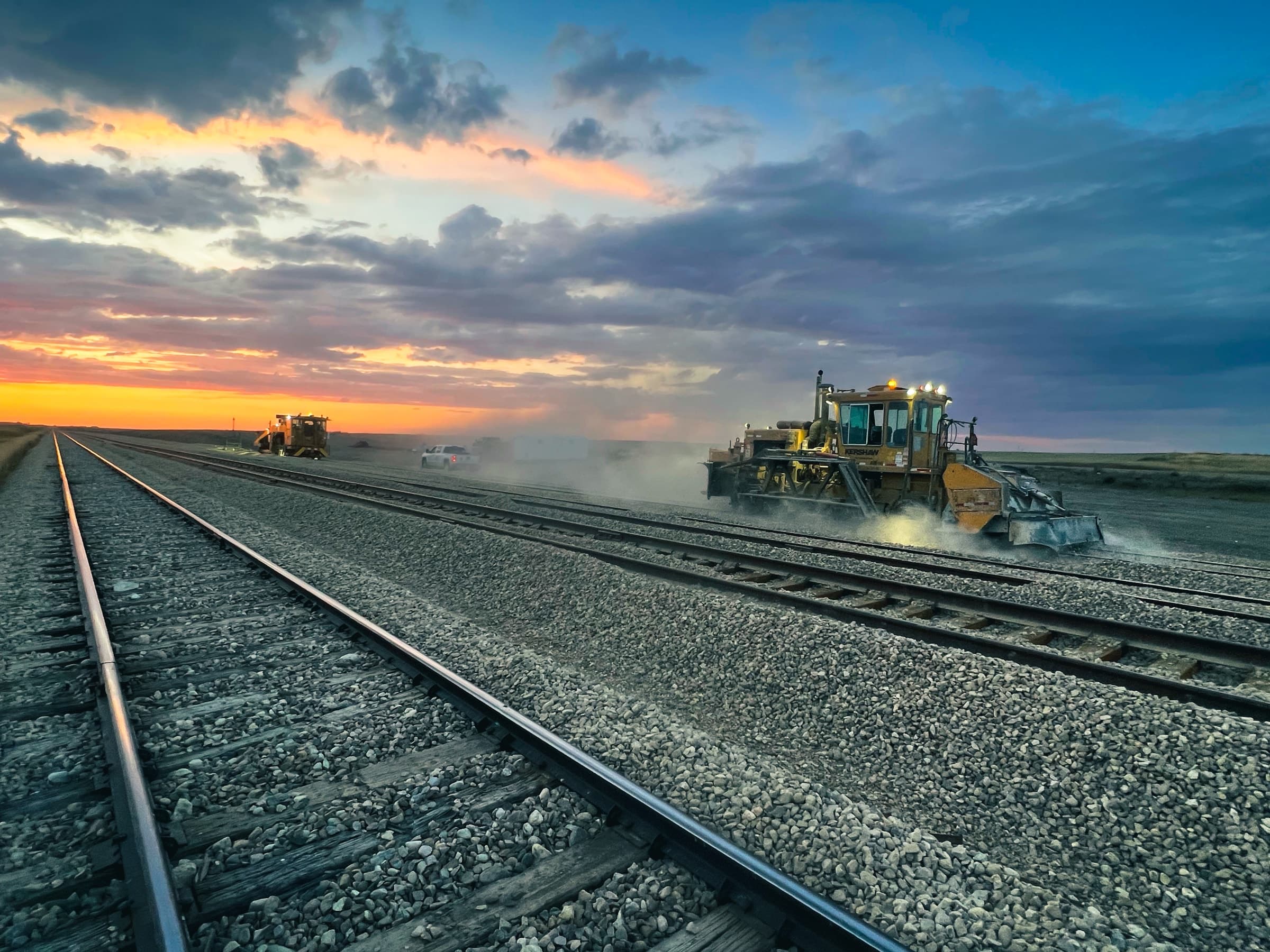
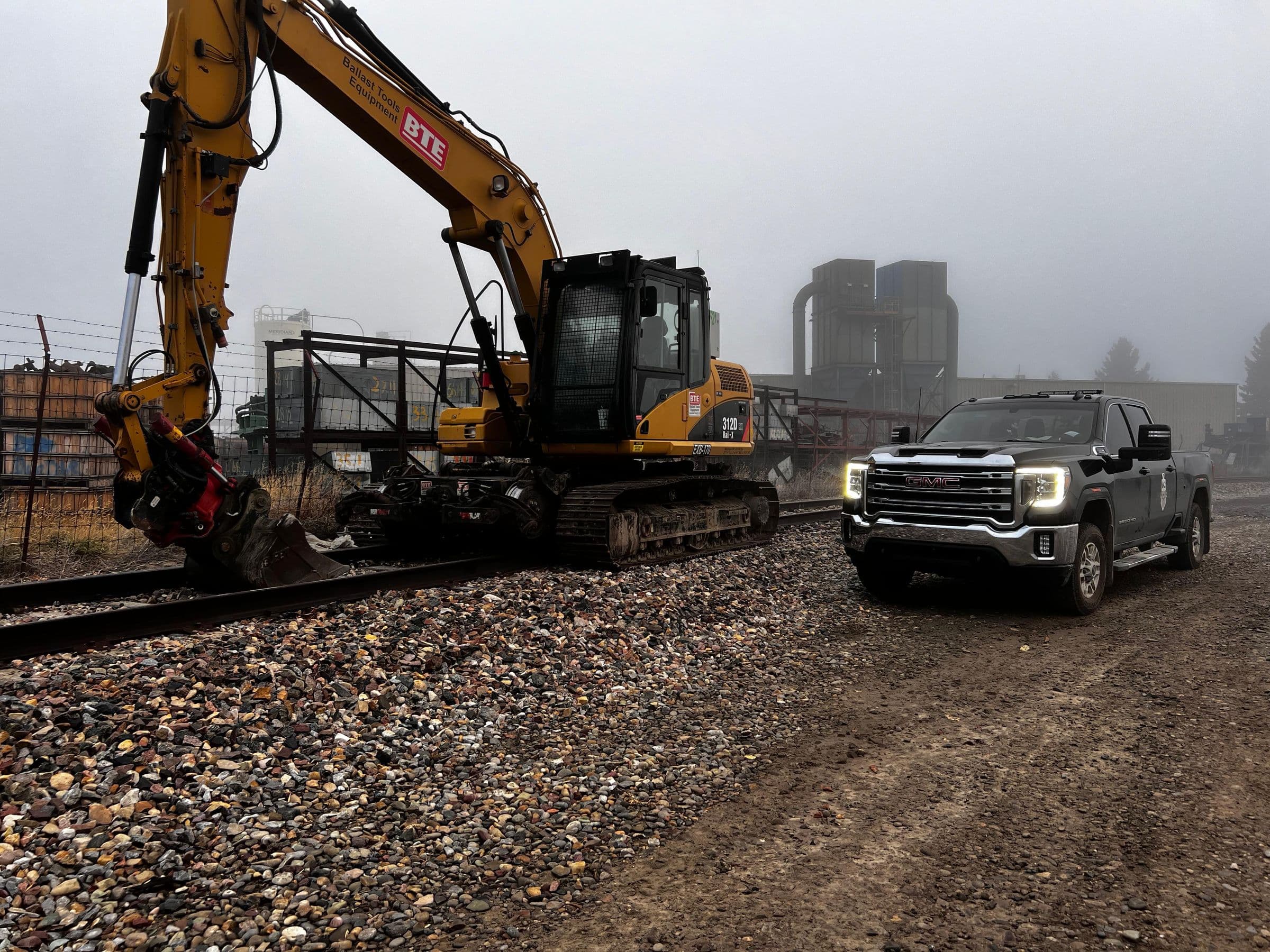
- Hi-rail excavators and backhoes that travel on rail and swing a bucket, tie head, or ballast cart.
- Hi-rail water trucks for fire watch, pre-wetting, and asset protection along the right of way.
- Hi-rail dump and material trucks for ballast and spoil where a train delivery is not practical.
Ironhorse runs hi-rail excavators and backhoes with Rototilt tie-replacer heads, hi-rail boom trucks, and a hi-rail fire-prevention truck with a 16,000-litre tank, a 2,050 litre-per-minute pump, and a front cannon that reaches 100 to 150 feet.
What a hi-rail truck does that a road truck cannot
Reach the work. A tie program three kilometres from the nearest crossing needs materials, tools, and people at the work face. A hi-rail boom truck drives there on the rail with the ties on board.
Move with the gang. As a production gang advances, the support truck advances with it. Nothing has to be staged trackside in advance or carried by hand.
Get in and out inside the work block. Hi-rail equipment sets on and off at crossings in minutes, which matters when a track window is measured in hours.
Carry water where fire risk is. Timber bridges, pole lines, and grass along the right of way burn. A hi-rail water truck can reach them and stay on site during hot work, which a road tanker usually cannot.
The rules that come with it
A hi-rail vehicle on a railway is a track unit, and it operates under the railway's rules. In practice that means:
- The operator holds the railway rules qualification the track owner requires, such as CROR on federally regulated lines.
- Movements are made under track protection, with the limits and time authorized before the vehicle sets on.
- The vehicle is inspected before rail use, including the rail gear, brakes, and lights.
- Set-on and set-off points are planned in advance, because not every crossing suits every vehicle.
Owners hiring a contractor with hi-rail equipment should ask who provides protection, how set-on points are chosen, and what inspection records are kept.
When a job needs one
If any of these apply, the scope probably includes hi-rail equipment:
- The work site is not reachable by road, or road access is soft, gated, or seasonal.
- Materials have to move along the track rather than to one point beside it.
- Hot work is planned during fire season, or the site is near timber structures or dry vegetation.
- A derailment or washout has to be reached quickly with lifting capacity and tools.
- Inspections cover long stretches of track that would take days on foot.
Renting versus hiring the crew
Hi-rail trucks are sometimes rented on their own, but the operator qualification, the protection arrangement, and the railway's inspection requirements travel with the vehicle. For most owners it is simpler to hire the equipment with a qualified operator as part of the scope. Ironhorse offers rentals, sales, and in-person training on selected machines, and confirms availability and operator arrangements for each request.
The equipment page lists the published fleet, the fire and asset loss prevention page covers the water truck in detail, and the contact page is where to send a location and scope.
Sources and further reading
Planning guidance for owners and procurement teams. Confirm site conditions, applicable jurisdiction, and the track owner's current requirements with qualified personnel before work begins.
Turn the plan into a project brief.
Gather the location, condition information, access windows, and scope before requesting a bid.
Common questions
Can any truck be fitted with hi-rail gear?
Most truck and excavator chassis can be rail-equipped by a hi-rail gear manufacturer, but the finished unit has to meet the railway's inspection requirements before it runs on track. Pickups, boom trucks, water trucks, dump trucks, excavators, and backhoes are all common.
Who can drive a hi-rail truck on a railway?
An operator qualified under the track owner's rules, working under track protection authorized for the movement. On federally regulated railways that means Canadian Rail Operating Rules qualification plus the railway's own requirements.