

Railway service
Fire & Asset Loss Prevention
Hi-rail water trucks, fire watch, and wide-area wetting for trackside assets and hot work.
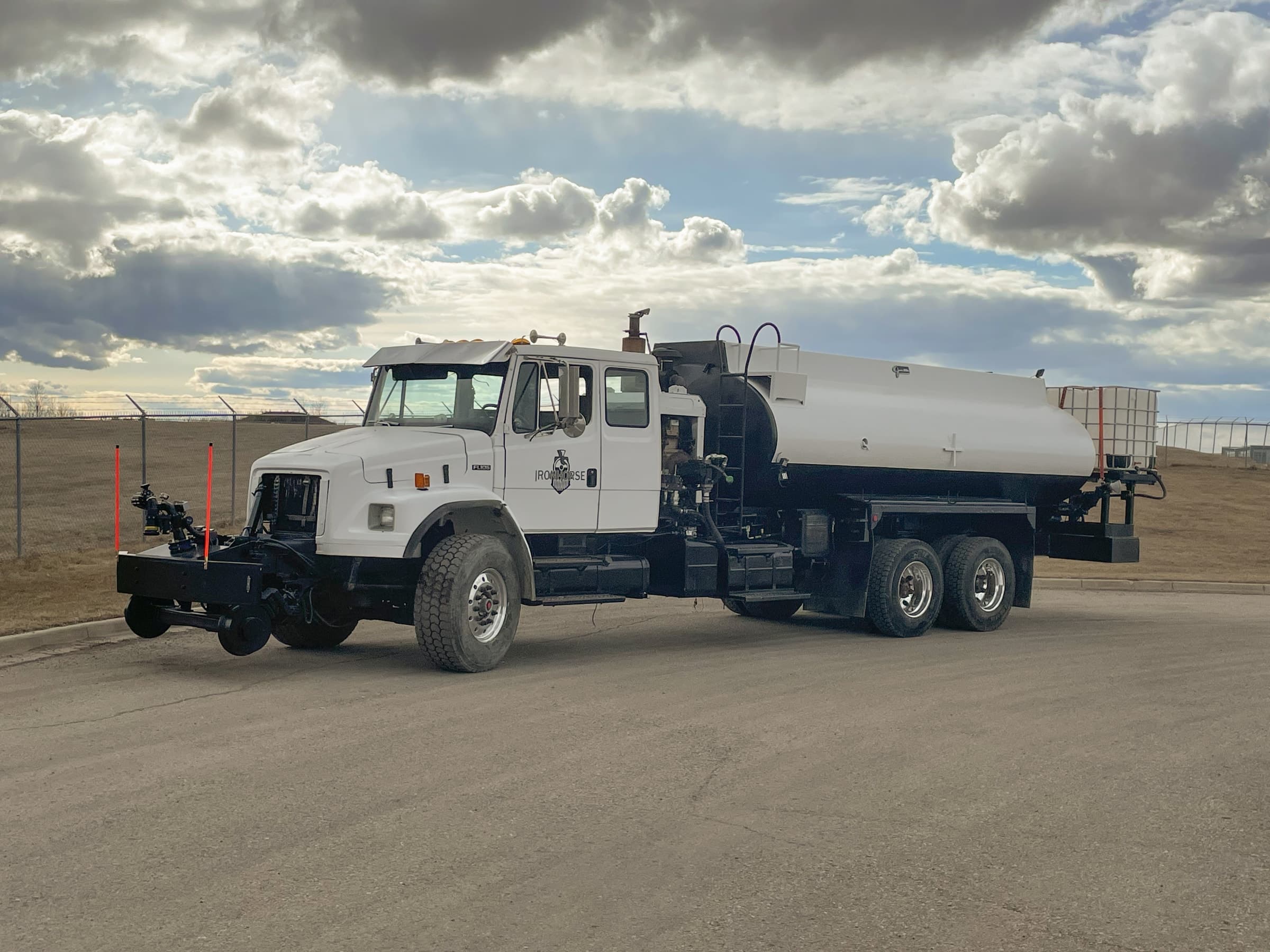
A complete field scope.
Ironhorse operates hi-rail fire-prevention trucks for trackside asset protection, fire watch, and hot-work support. The published fleet specification includes a 16,000 L tank, a 2,050 LPM pump, front-cannon reach of 100-150 feet, and side-sprinkler reach of 80 feet.
How the work moves.
Map the exposure
Identify fuels, assets, access, water supply, weather, and the planned hot work.
Build the wet line
Position hi-rail water equipment and apply water or approved retardant where required.
Maintain the watch
Monitor the work area and document the controls through the required watch period.
Equipment matched to scope
- 16,000 L hi-rail water truck
- 2,050 LPM pump
- Front-mounted water cannon
- Side sprinklers
- Eco-Gel application system
Common questions
Answers drawn from Ironhorse's published information and standard railway practice. Project specifics are confirmed in the bid.
What can the hi-rail fire truck reach?
Ironhorse publishes a 16,000-litre tank, a 2,050 litre-per-minute pump, a front cannon with 100 to 150 feet of reach, and side sprinklers reaching 80 feet.
When is fire prevention required?
During hot work such as welding and grinding, during provincial fire bans, and where timber bridges, poles, or buildings sit close to the track in dry conditions.
Is fire retardant available?
Yes. Ironhorse publishes the use of Eco-Gel, a stick-and-stay fire retardant for Class A and B fire suppression.
Plan with evidence.
Discuss your fire & asset loss prevention project.
Share your location, target dates, and the scope you know. Confirm access and operating requirements with the team before pricing.
Related capabilities
New Track Construction
Industrial spurs, yard tracks, and loop tracks built from sub-ballast through commissioning.
Track Rehabilitation
Tie replacement, rail relay, turnout renewal, drainage work, and surfacing programs.
Emergency Derailment Response
Derailment clearing, re-railing, emergency track repair, and return-to-service support.