
What track surfacing fixes, and what it does not
Tamping, lining, and regulating explained for track owners: the geometry problems surfacing corrects, the defects it cannot, and how to tell the difference.
- Published
- Updated
- Reading time
- 4 min
The short answer
Surfacing adjusts track geometry through tamping, lining, and ballast regulation. It does not replace defective rail or ties, or resolve an underlying drainage or subgrade problem by itself. Inspection findings should determine whether surfacing is sufficient or part of a wider rehabilitation scope.
Surfacing is the most common maintenance activity on any railway, and one of the least understood by people outside the industry. A tamper and a regulator come through, the track looks straight and the ballast looks tidy, and trains run smoother. What actually changed, and how long will it last?
This article explains what surfacing does to the track, the problems it corrects, the problems it does not, and how a track owner can tell which one they have.
What the machines do
Surfacing is done by two machines working together.
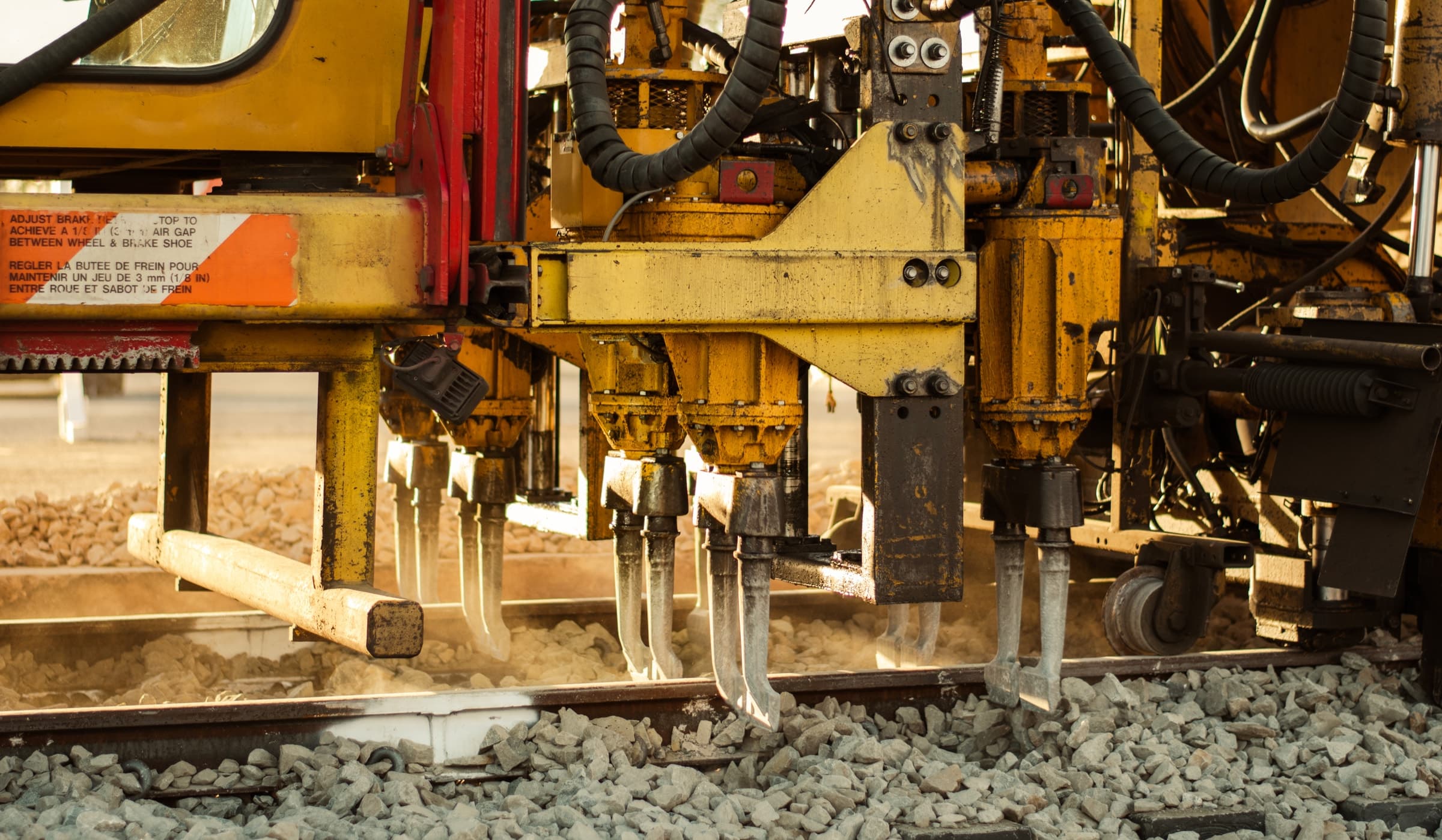
The tamper lifts the track to a target elevation, squeezes ballast under the ties to hold it there, and pushes the track sideways to correct alignment. Modern production tampers measure the existing geometry ahead of the machine and compute the lift and shift needed at each tie. The tamping tools plunge into the ballast beside each tie, close under it, and vibrate to consolidate the stone.
The ballast regulator follows the tamper. It redistributes ballast across the track, fills cribs, dresses the shoulder to the correct profile, and sweeps stone off the ties and rail. A well-shaped ballast section holds the track laterally and drains properly.
Together they correct three geometry parameters:
- Profile: the vertical alignment of each rail along the track, including low spots and dips.
- Cross-level: the difference in elevation between the two rails, including superelevation in curves.
- Alignment: the horizontal position of the track, including kinks and misaligned curves.
What surfacing fixes
Surfacing is the right tool when the track structure is sound and the problem is geometry.
- Low joints and dips where ballast has consolidated unevenly under traffic
- Cross-level errors that make cars rock, particularly in curves
- Alignment kinks from lateral forces or uneven consolidation
- Rough ride on otherwise sound track
- Loss of ballast section after tie work, undercutting, or drainage repairs
- New construction that needs its first lifts and consolidation before service
A production surfacing pass on track with good ballast, sound ties, and intact drainage will hold for a long time, measured in tonnage rather than months.
What surfacing does not fix
Surfacing corrects symptoms. Some symptoms come from causes that surfacing cannot reach, and tamping them repeatedly wastes money.
Fouled ballast. Ballast that is full of fines, mud, or coal dust no longer drains or locks together. Tamping fouled ballast produces a lift that settles back within weeks. The fix is undercutting or ballast cleaning to remove the fouled material and restore drainage.
Failed subgrade. If the ground under the ballast is soft or pumping, the track will settle no matter how often it is tamped. Mud on the ballast surface after rain is a common sign. The fix is drainage and subgrade repair.
Defective ties. A tamper can lift track on rotten or split ties, but the ties cannot hold the geometry. Tie replacement has to come before surfacing, not after.
Rail defects. Battered joints, corrugation, and worn rail produce a rough ride that surfacing does not address. Welding, grinding, or rail replacement is the answer.
Blocked drainage. Standing water in the ditch, silted culverts, or a ballast shoulder that traps water will undo any surfacing pass. Drainage first, surfacing second.
How to tell which problem you have
A few field observations separate geometry problems from structural ones.
| Observation | Likely cause | Surfacing alone? |
|---|---|---|
| Isolated low spots at joints, ballast clean | Consolidation at joints | Yes |
| Rocking cars in a curve, ballast clean | Cross-level error | Yes |
| Mud or fines on the ballast surface | Fouled ballast or subgrade | No |
| Track settles again within weeks of tamping | Fouled ballast, drainage, or subgrade | No |
| Ties moving or plates cutting into ties | Tie condition | No |
| Standing water in ditches after rain | Drainage | No |
An inspector's report usually makes this call. If it is not clear, a track contractor can walk the section and advise before committing machines.
Surfacing in constrained environments
Not all track has room for a full-size production tamper. Transit rights of way, tunnels, station platforms, and industrial sites with tight clearances need equipment configured to fit. Compact tampers and regulators built for transit profiles allow surfacing in places that would otherwise require hand work.
Planning a surfacing program
A surfacing program starts with geometry data, either from an inspection car, a handheld gauge, or the tamper's own measuring system. From there:
- Identify sections outside the owner's geometry tolerances.
- Check each section for the structural problems above and address them first.
- Sequence the work around track time and traffic.
- Surface, regulate, and verify the finished geometry.
- Record the results as the baseline for the next inspection cycle.
Questions to ask a surfacing contractor
- What geometry measurement does the tamper use, and can I get the before-and-after data?
- How will the shoulder and crib be regulated, and to what profile?
- What happens if the crew finds fouled ballast or bad ties during the pass?
- Can the equipment fit my clearances and track time?
Ironhorse surfaces railway track with MKIV tampers and ballast regulators across Alberta, British Columbia, and Saskatchewan, including transit-profile machines designed in-house for narrow rights of way. The production surfacing and transit maintenance pages describe the equipment and scope.
Sources and further reading
Planning guidance for owners and procurement teams. Confirm site conditions, applicable jurisdiction, and the track owner's current requirements with qualified personnel before work begins.
Turn the plan into a project brief.
Gather the location, condition information, access windows, and scope before requesting a bid.
Common questions
How often should industrial track be surfaced?
There is no fixed interval. Surfacing is triggered by geometry: cross-level, profile, and alignment measurements that drift outside the owner's standard, or ride and drainage problems observed by inspectors. Heavy-tonnage loops need it more often than lightly used spurs.