
Planning an industrial rail spur: questions to answer before design
A practical checklist for shippers and developers considering rail service in Alberta, BC, or Saskatchewan, from serving-railway agreements to turnout locations and construction windows.
- Published
- Updated
- Reading time
- 4 min
The short answer
Start with the serving railway, intended traffic, connection location, and facility layout. Then establish design requirements, land and utility constraints, civil responsibilities, and acceptance criteria. A track plan and a defined scope are needed before a dependable budget or schedule can be prepared.
Rail service can change the economics of a facility. A spur that lets a plant, terminal, or distribution centre load directly to rail removes a truck leg, opens up longer-haul markets, and makes the site more valuable. Getting there involves more than laying track. Most of the time on a spur project is spent before the first tie is placed.
This article is a checklist for shippers, developers, and municipalities in Alberta, British Columbia, and Saskatchewan who are considering a new industrial spur. It focuses on the questions that decide whether the project is feasible, what it will cost, and how long it will take.
Start with the serving railway
Every spur connects to someone else's track. The railway that owns the main line or branch you want to connect to has to agree to the connection, approve the design, and typically install the turnout that joins your spur to their track. That process, often called an industry track agreement or private siding agreement, sets out:
- Where the connection can be made, and whether the location works for train operations
- Who designs, builds, owns, and maintains the turnout and lead track
- Design standards the spur has to meet
- How cars will be delivered and picked up, and how often
- Insurance, liability, and inspection obligations
Starting this conversation early is the single best way to shorten the schedule. Railways have finite engineering capacity, and the agreement often takes longer than construction.
Answer the operating questions before the design questions
A spur is designed around how it will be used. Before anyone draws a plan, be able to answer:
What cars, how many, how often? Covered hoppers, tank cars, boxcars, and centrebeam flats have different lengths and clearance requirements. A facility receiving three cars a week and one loading a hundred-car unit train need different track.
Where do cars sit while they are being loaded or unloaded? Loading racks, pits, and doors fix the position of the track. Everything else works backwards from there.
Do cars need to be moved on site? If so, by what: the railway's locomotive, your own switching equipment, a car mover, or a winch. This sets grade limits, clearance needs, and whether you need a runaround track.
Will the spur ever need to grow? A second track, a longer tail, or a loop is far cheaper to allow for in the initial alignment than to retrofit.
The civil work that has to come first
Track is only as good as what is under it. The subgrade, drainage, and sub-ballast are usually built by a civil contractor before the track contractor arrives. Questions to settle:
- Soils. A geotechnical investigation tells you whether the alignment needs excavation, engineered fill, or ground improvement. Soft ground under a loaded rail car settles in ways that are expensive to correct later.
- Drainage. Water is the enemy of track. Ditches, culverts, and cross-drainage have to keep the track structure dry through spring melt and summer storms.
- Utilities. Buried pipelines, power, fibre, and water crossings along the alignment need to be located, protected, or relocated.
- Roads and crossings. Every place the spur crosses a road, public or private, introduces a crossing design, signage or protection requirements, and sometimes regulatory approvals.
Track design choices that affect cost
Once the alignment is set, a handful of decisions drive most of the track cost.
| Decision | Options | What it affects |
|---|---|---|
| Rail | New or relay rail, section weight | Material cost, life, and what the serving railway will accept |
| Ties | Wood or concrete | Cost, life, and construction method |
| Turnouts | Number, size, and hand | Each turnout is a significant cost and a maintenance point |
| Ballast depth | Per railway standard and soils | Material quantity and long-term geometry |
| Curvature and grade | Alignment constraints | Car handling, wheel wear, and whether a locomotive can work the track |
A contractor with construction experience can often show where a small alignment change removes a turnout or eases a curve enough to save real money.
Sequencing construction
A typical spur build, once civil work is done, follows this order:
- Sub-ballast verification and layout
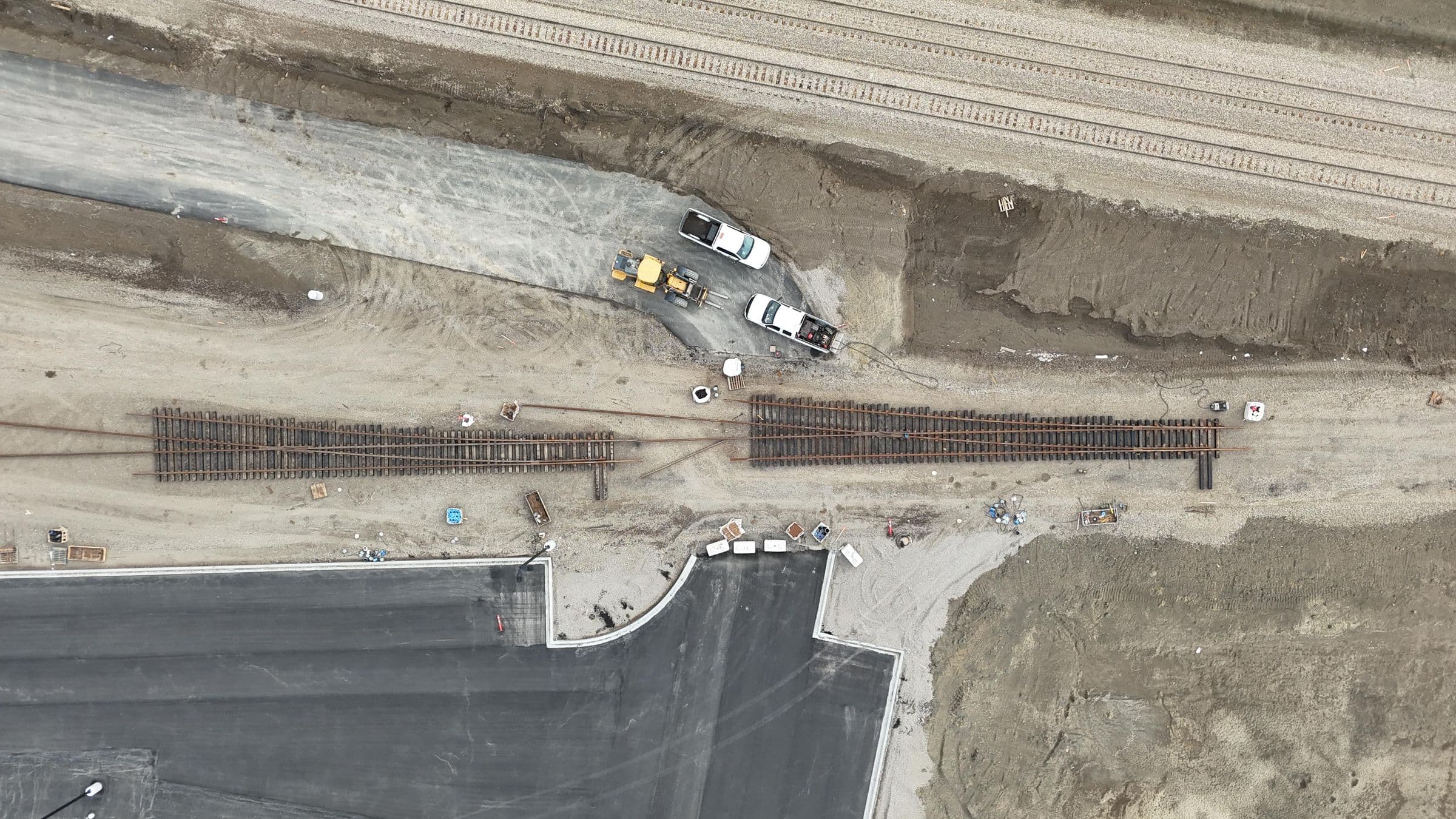
- Turnout and track material delivery and staging
- Tie distribution and rail placement
- Turnout installation
- Spiking, anchoring, and fastening
- Ballast placement, surfacing, and lining
- Final geometry verification, inspection, and documentation
- Connection to the serving railway's track and acceptance
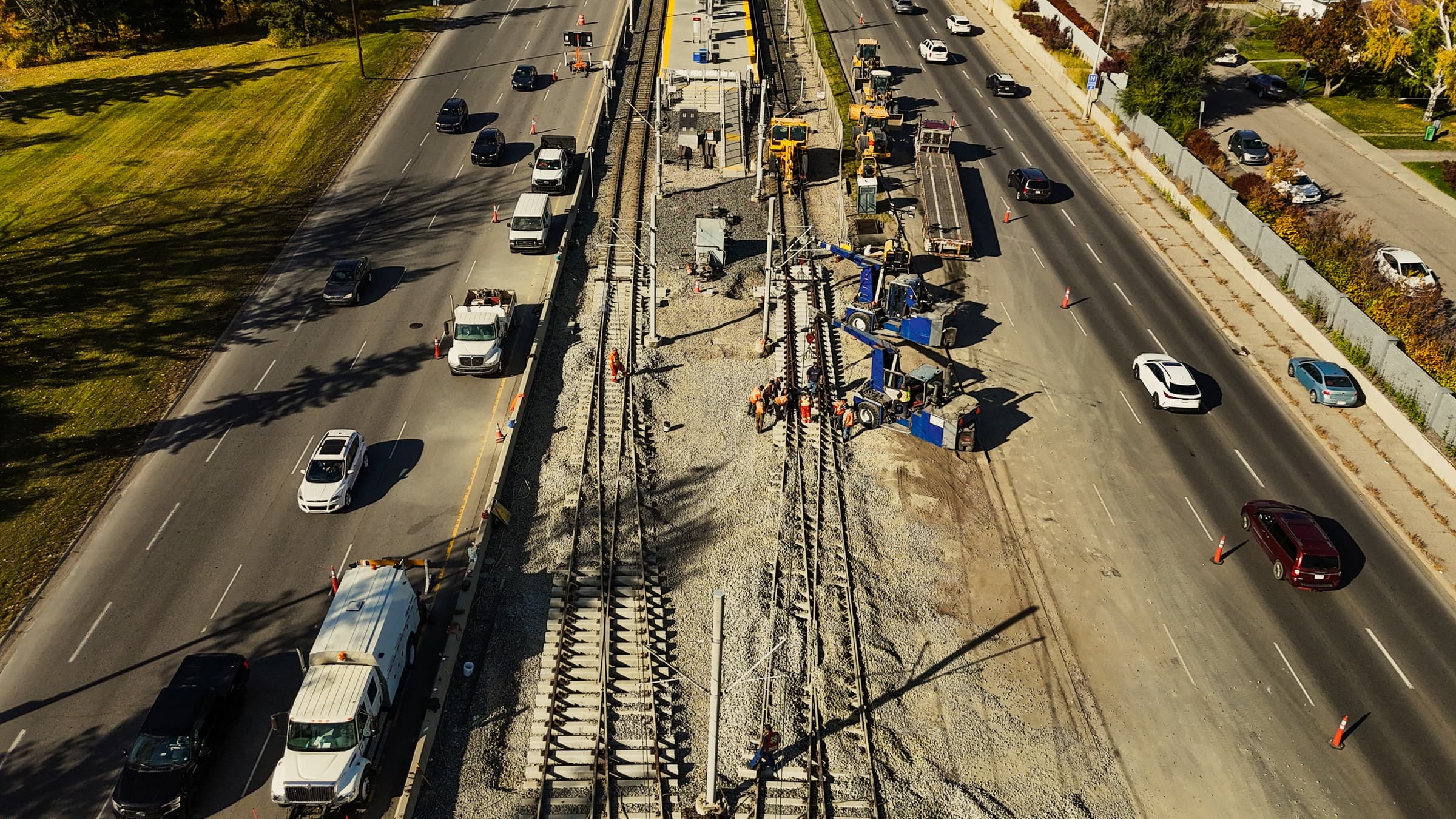
Track time on the connecting railway is often the tightest window in the schedule. The final tie-in has to be planned around train operations, and the railway's inspector signs off before the first car comes across.
Budget items that get missed
- Serving railway engineering review and turnout charges
- Geotechnical investigation
- Crossing protection and signage
- Fencing, gates, and derails for site security
- Surveying and as-built documentation
- Initial track inspection program after commissioning
What to bring to a contractor
A site plan, the intended car types and volumes, the connection location you have discussed with the railway, and any geotechnical or survey information you already have. With that, a track contractor can provide a realistic scope, sequence, and budget range.
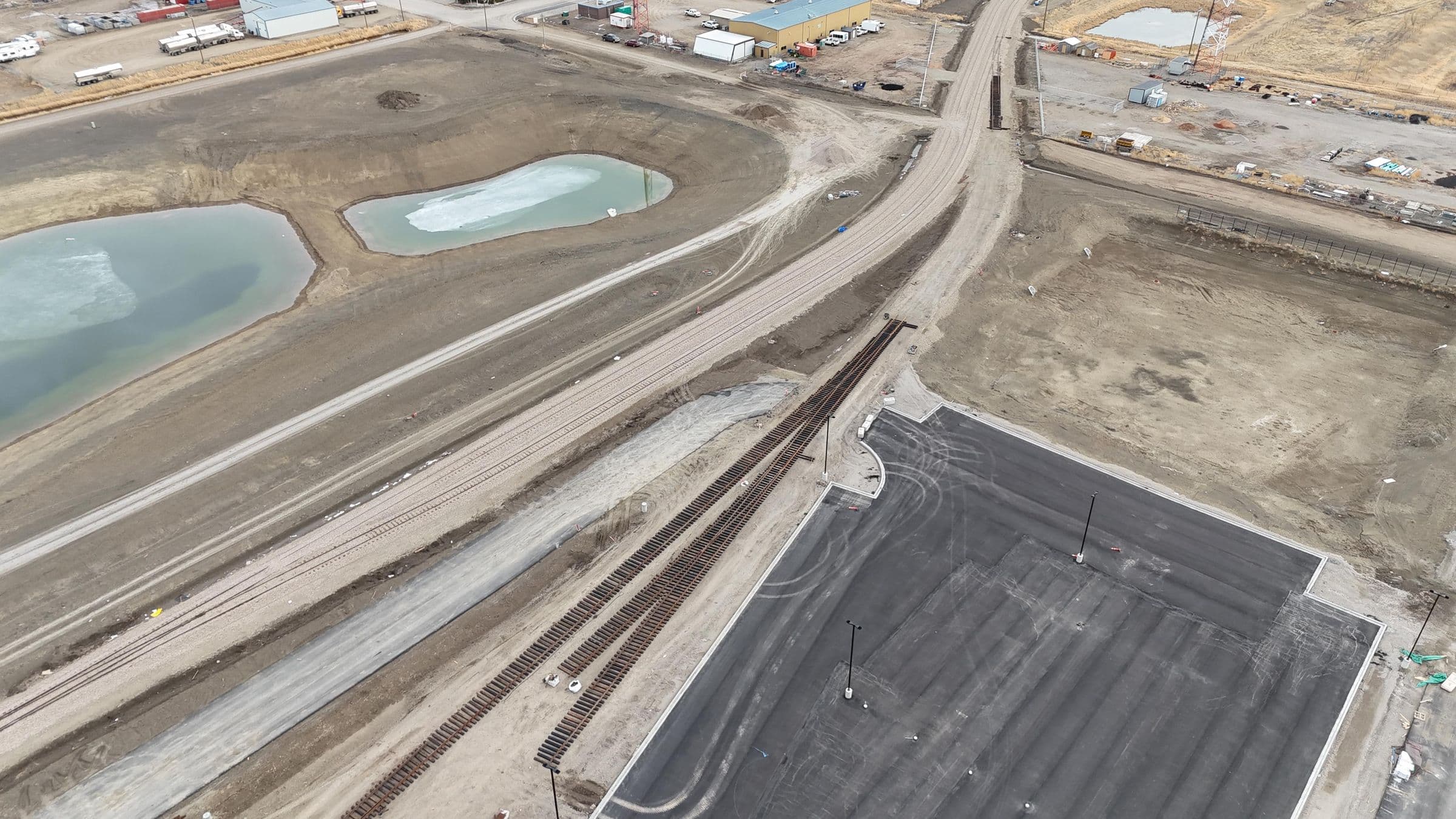
Ironhorse builds industrial spurs, yard tracks, and loop tracks across Western Canada, and was named as one of the contractors on Alberta's publicly documented Coaldale industrial rail spur. The new track construction page outlines the scope, and the Coaldale project profile links to the public record.
Sources and further reading
- Government of Alberta: Coaldale Industrial Rail Spur Line
- Transport Canada: Rules Respecting Track Safety
Planning guidance for owners and procurement teams. Confirm site conditions, applicable jurisdiction, and the track owner's current requirements with qualified personnel before work begins.
Turn the plan into a project brief.
Gather the location, condition information, access windows, and scope before requesting a bid.
Common questions
How long does it take to build an industrial rail spur?
The schedule depends on railway agreements, design and approvals, civil readiness, material availability, construction access, and acceptance. Request a project-specific sequence after the scope and responsibilities have been defined.
Who owns the turnout that connects a spur to the main line?
Typically the serving railway installs, owns, and maintains the mainline turnout and a defined length of lead track, while the shipper owns the spur beyond that point. The agreement with the railway sets the exact boundary.