
Wildfire season and the railway: how hi-rail fire prevention works
How hi-rail water trucks, fire watch, and pre-wetting protect bridges, poles, tree lines, and buildings along the right of way during hot-work and fire-ban conditions.
- Published
- Updated
- Reading time
- 4 min
The short answer
Hi-rail water equipment can support railway fire prevention and asset protection where access and permissions allow. The work must fit the owner's fire plan, local restrictions, and site conditions. Equipment availability alone does not authorize hot work during a fire ban.
Railways run through some of the most fire-prone country in Western Canada. Dry grass along the right of way, timber bridges, wood ties, creosote, and power poles all burn. Trains, track work, and lightning all provide ignition. A single trackside fire can close a line, destroy a bridge that takes months to replace, and spread onto neighbouring land.
Fire prevention on the railway is a mix of planning, equipment, and people on the ground during the periods of highest risk. This article explains how it works and what a hi-rail fire prevention truck brings to the job.
Where trackside fires start
Most trackside fires come from a small number of sources:
- Hot work. Thermite welding, rail cutting, and grinding throw sparks and slag into dry vegetation. Welding crews are the most common cause of fires during track maintenance.
- Train operations. Brake shoes, hot bearings, and exhaust can ignite grass along the right of way.
- Equipment. Track machines with hot exhaust systems working in dry grass.
- Lightning and wildfire. Fires that start elsewhere and burn onto the right of way.
The ignition source matters less than the conditions. In a wet spring, sparks land on green grass and go out. In August, the same sparks in cured grass with a wind behind them can start a fire that outruns a crew on foot.
What is at risk
Railway assets along the right of way are often older, wooden, and hard to replace quickly.
- Timber bridges and trestles. Creosote-treated timber burns hot and long, and a bridge fire closes the line for the duration of the rebuild.
- Ties. Wood ties will burn, and a tie fire spreads along the track.
- Power poles and signal equipment. Poles along the right of way carry power and communications.
- Buildings. Sheds, stations, and equipment enclosures at trackside.
- Neighbouring land. Crops, pasture, and forest beside the right of way, with the liability that follows a fire that spreads.
How hi-rail fire prevention trucks work
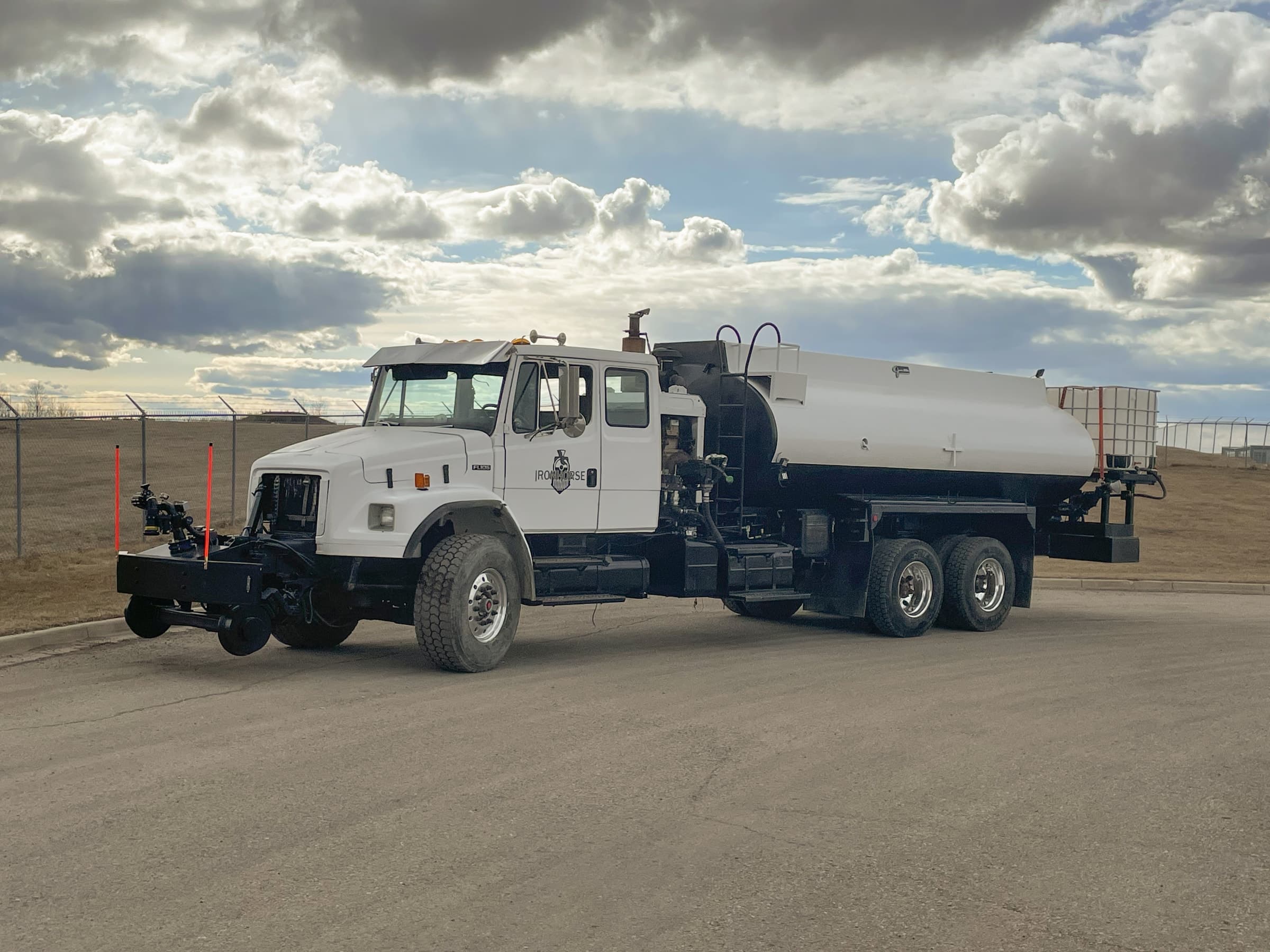
A hi-rail water truck is a road truck fitted with rail wheels so it can travel on track. It carries a large water tank, a pump, and spray equipment sized for trackside work. Ironhorse publishes the specification of its trucks as a 16,000-litre tank, a 2,050 litre-per-minute pump, a front-mounted cannon with 100 to 150 feet of reach, and side sprinklers with 80 feet of reach. Where a retardant is called for, an Eco-Gel stick-and-stay product can be applied.
Those numbers translate into a few practical capabilities:
- Pre-wetting. Before hot work begins, the truck soaks the ballast, ties, and vegetation around the work site so that sparks land on wet material.
- Fire watch. During and after hot work, the truck stays on site with water charged, able to knock down a spot fire before it spreads.
- Bridge and asset protection. The cannon reaches timber bridge decks, pole lines, and buildings from the track, and side sprinklers wet a wide corridor as the truck travels.
- Patrol. During fire bans or extreme conditions, the truck follows trains or work gangs along the right of way.
- Initial attack. A trackside fire found early can often be extinguished by the truck before wildfire services arrive.
The advantage of a hi-rail unit over a road truck is access. Most of the right of way is not reachable by road, and the places that burn are often the places where no road goes.
Fire bans, permits, and hot work rules
Provincial fire bans and railway hot work rules both apply to track maintenance. In practice, during a ban, hot work is either prohibited or requires:
- A written hot work permit or plan
- Pre-wetting of the work area
- A fire watch with suppression capability during the work and for a defined period afterwards
- A means of communication with the railway and fire services
A hi-rail fire prevention truck is typically how the pre-wetting and fire watch requirements are met when the work site is away from road access.
Building fire prevention into the plan
Fire prevention is cheapest when it is part of the project plan rather than a reaction to a red flag warning.
- Check conditions. Provincial fire danger ratings and railway fire risk levels set what work is allowed.
- Identify assets. Bridges, poles, and buildings near the work site that need protection.
- Assign the truck. Schedule the fire prevention truck to the welding or grinding crew for the duration of the hot work.
- Pre-wet and watch. Soak the site, work, and keep the truck on site for the required watch period.
- Document. Record conditions, actions taken, and any fires found and extinguished.
Questions to ask a fire prevention contractor
- What tank capacity, pump rate, and reach does the truck have?
- Is retardant or gel available, and when is it used?
- Are the operators qualified for the railway's rules and for fire watch duties?
- Can the truck be dedicated to a hot work crew for the season?
Ironhorse operates hi-rail fire prevention trucks for trackside asset protection, fire watch, and hot-work support across Western Canada. The fire and asset loss prevention page describes the equipment and scope.
Sources and further reading
Planning guidance for owners and procurement teams. Confirm site conditions, applicable jurisdiction, and the track owner's current requirements with qualified personnel before work begins.
Turn the plan into a project brief.
Gather the location, condition information, access windows, and scope before requesting a bid.