
Railway service
Thermite Welding
Field welding for joint elimination, pull-aparts, defect repair, and continuous welded rail.
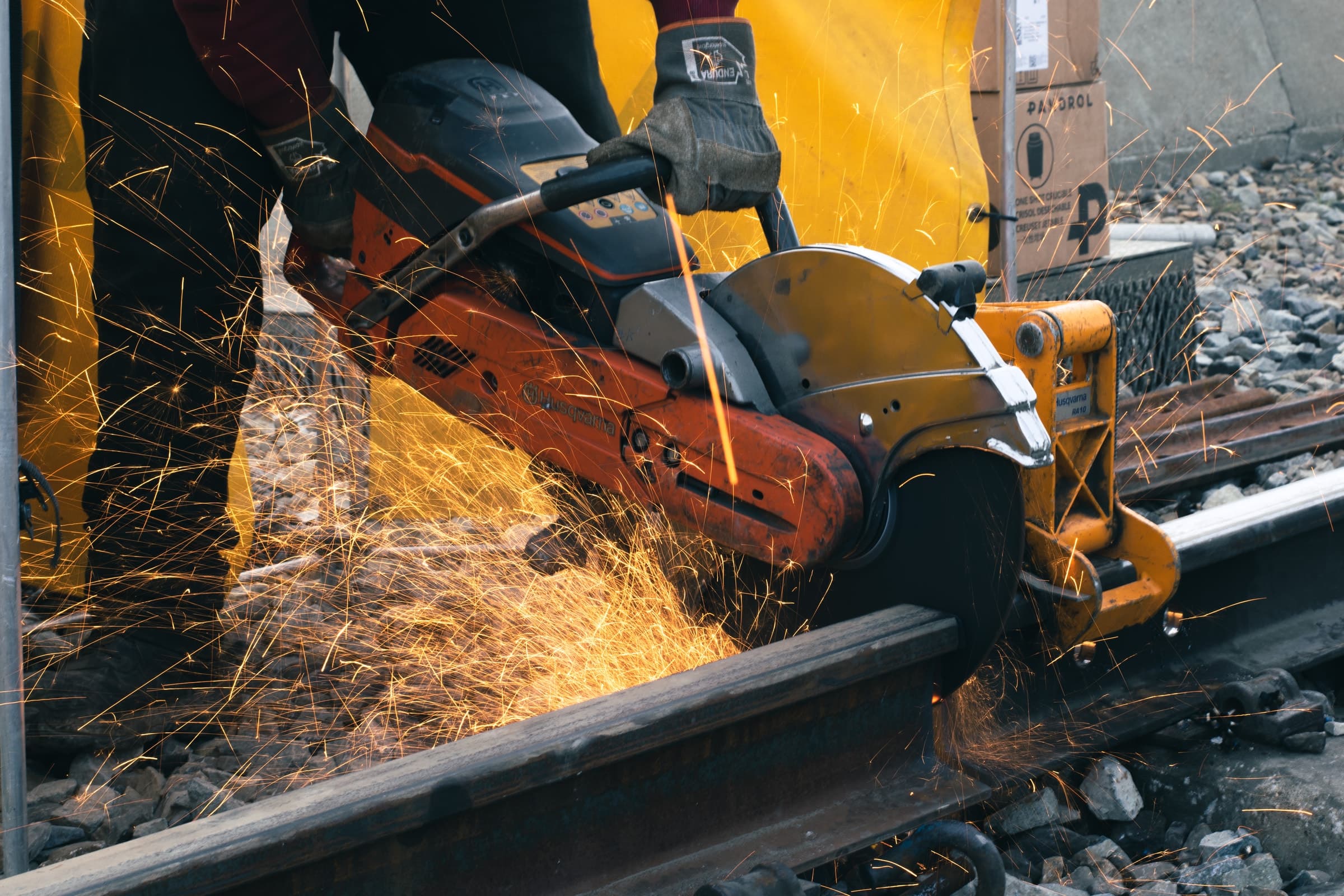
A complete field scope.
Ironhorse field welding crews perform thermite welds for joint elimination, pull-aparts, broken-rail repair, and continuous welded rail programs. Rail is cut, aligned, welded, ground, finished, and inspected to the applicable railway standard.
How the work moves.
Confirm the rail
Verify section, metallurgy, temperature, stress condition, access, and owner procedure.
Build the weld
Prepare, align, mould, preheat, pour, shear, and finish under controlled conditions.
Inspect the result
Complete final grinding, visual checks, documentation, and track handback.
Equipment matched to scope
- Mobile welding units
- Rail saws
- Hydraulic tensors
- Profile grinders
- Hi-rail support trucks
Common questions
Answers drawn from Ironhorse's published information and standard railway practice. Project specifics are confirmed in the bid.
What does Ironhorse need before a welding program?
Rail section and condition, joint count and locations, track access for the welding truck, the applicable railway or owner welding procedure, and the available track time. Rail with heavy head wear or mismatched sections may need replacement before welding.
Can thermite welds be made in winter?
Yes, with controls. Rail temperature, preheat, and rail stress are managed to the applicable procedure so the finished rail is not locked in at the wrong length for summer heat or winter cold.
How many welds can a crew complete in a shift?
Production depends on access, track time, and how much rail adjustment each joint needs. A mobile crew with a rail saw, tensor, and grinder typically completes several welds per shift on accessible industrial track.
Plan with evidence.
Discuss your thermite welding project.
Share your location, target dates, and the scope you know. Confirm access and operating requirements with the team before pricing.
Related capabilities
New Track Construction
Industrial spurs, yard tracks, and loop tracks built from sub-ballast through commissioning.
Track Rehabilitation
Tie replacement, rail relay, turnout renewal, drainage work, and surfacing programs.
Emergency Derailment Response
Derailment clearing, re-railing, emergency track repair, and return-to-service support.